

Conditions We Treat: scoliosis.
Scoliosis is usually described as a curvature and rotation of the spine. But scoliosis is really just a label.
In reality, it’s a full-body coordination problem that shows up in the spine - similar to what we see in posture and gait-related dysfunction.
Most people get the X-ray, get told to just ‘live with it’, then stop.
We don’t.
At Functional Patterns Sunshine Coast, we look at how the entire system is organising force - walking, standing, running, and throwing - because that’s where the pattern actually lives.
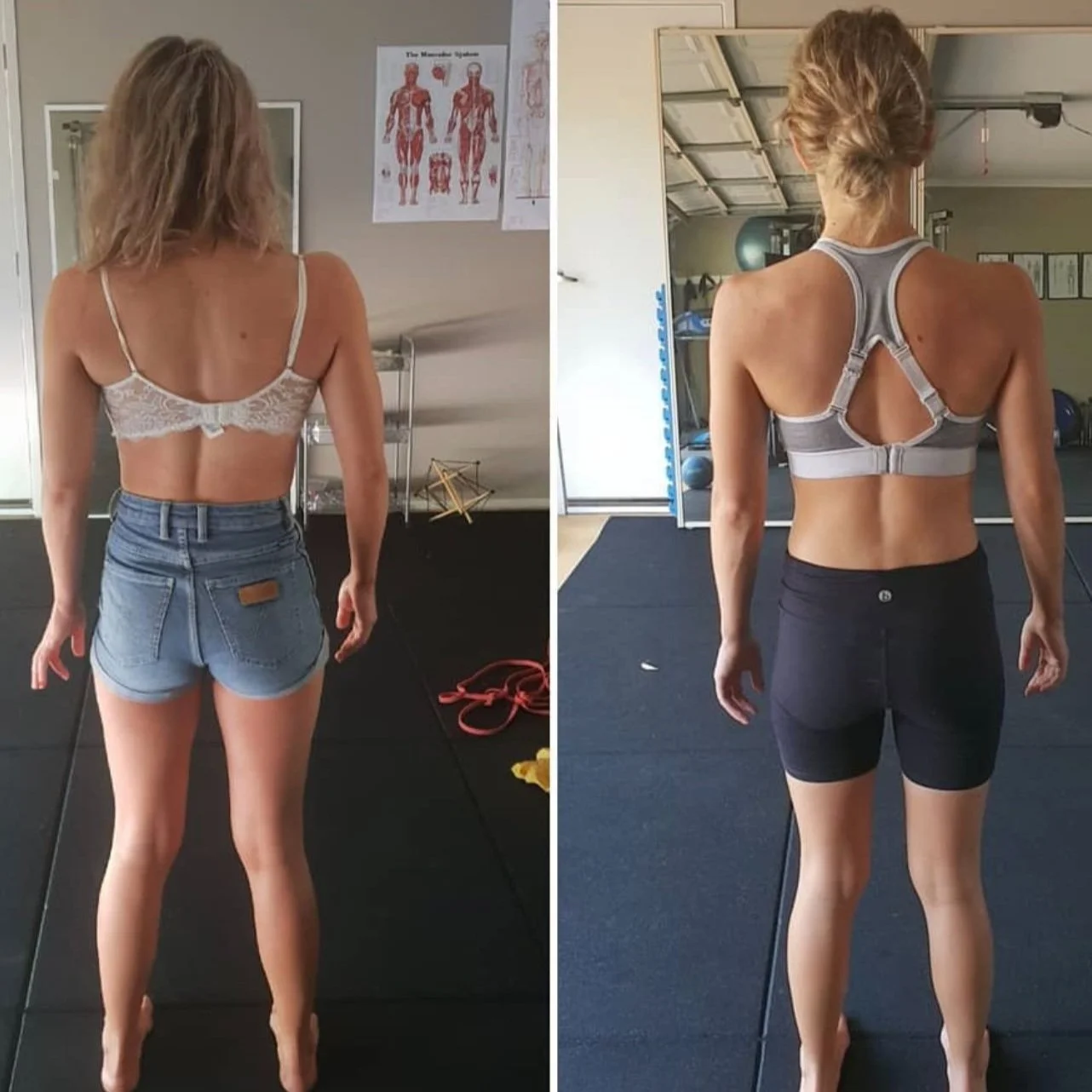
A curved spine is the output.
Movement is the input.
Scoliosis Is Not Just a Spine Issue.
If you only look at the spine, you miss the system that built it.
Now consider this: people with scoliosis also show:
Asymmetrical gait patterns
Uneven weight distribution
Rotational compensation through the rib cage
Pelvic shift or tilt strategies
Limited or distorted trunk rotation
Overuse in certain hip or spinal muscles
Poor force transfer through walking and standing
Dysfunctional breathing mechanics
The body is always trying to work around a problem and scoliosis is often one of those long-term workarounds.
Why “Fixing the Curve” Isn’t the Full Picture.
Bracing, stretching, and isolated strengthening all focus on structure.
But structure is downstream of behaviour.
If someone continues to walk, stand, and load their body the same way every day, nothing really changes long-term.
The nervous system will keep choosing the same compensation strategy - because it still works (just inefficiently and often with a large cost).
So the question shouldn’t just be:
“How do we straighten the spine?”
Instead, it becomes:
“Why is the body organising itself this way under load?”
At Functional Patterns Sunshine Coast, this is what we spend our time working to understand and address.
This is similar to how we address posture at Functional Patterns Sunshine Coast below - read our article here: Can a Personal Trainer Fix Posture? (Most Can't)
The Real Driver: Movement Patterns.
Scoliosis doesn’t exist in isolation.
It’s tied to how you:
Walk (gait mechanics)
Transfer weight side to side
Rotate through the torso
Stabilise through the pelvis
Stack the rib cage over the pelvis
Coordinate breathing with movement
If any of these are inefficient, the spine becomes the compensator.
That’s why two people with the same scoliosis diagnosis can move completely differently - and feel completely different.
Why Walking Matters Most.
Walking is the most repeated movement pattern you have.
Every step is a rep.
If your gait is asymmetrical, your body is repeating that strategy thousands of times per day. Similar to what we discuss in our article: How Many Sets & Reps Should You Do?
Over time, that reinforces:
Rotational imbalance
Uneven loading through hips and spine
Rib cage distortion
Compensated posture
That’s why scoliosis tends to worsen as time goes on.
This is also why gait is a core focus in Functional Patterns training.
Fix the repetition, not just the symptom.
At Functional Patterns Sunshine Coast, we prioritise how you move behviourally - because that’s what actually shapes your structure.
What Training Looks Like.
We don’t isolate muscles and call it “corrective work.”
We look at how the entire system is behaving under load (especially across your most repeated patterns).
Training often includes:
Gait retraining
Standing integration patterns
Rotational control work
Force distribution training
Foot-to-pelvis connection
Rib cage and pelvic coordination
Progressive strength built on mechanics
The goal is not just to “strengthen.”
The goal is to improve coordination under real-world demand.
Because if coordination doesn’t improve, the pattern doesn’t change.
Scoliosis Training Goal (Simple Version).
Not:
chase symmetry for the sake of symmetry
stretch one side and strengthen the other blindly
chase temporary postural fixes
Instead:
improve how force moves through the system
reduce unnecessary compensation
improve gait efficiency
build usable strength on top of better mechanics
When movement improves, posture follows.
Not the other way around.
Start With an Assessment.
If you’ve been told you have scoliosis - or you’ve noticed asymmetry, discomfort, or postural distortion - the starting point is simple.
Get an assessment of how you actually move.
During your initial consultation we look at:
Posture under load
Walking mechanics
Weight transfer patterns
Rotational control
Rib cage and pelvic alignment in motion
Compensation strategies
Overall movement efficiency
From there, we build a plan based on what your body is actually doing - not just what it looks like on paper (or on a static X-ray).
Book Your Initial Consultation.
If you want to stop guessing and actually understand what your body is doing, start with a movement and posture assessment.
At Functional Patterns Sunshine Coast, we focus on fixing the underlying coordination issues that drive postural patterns like scoliosis - not just chasing symptoms.
Book an assessment to get a clear breakdown of how your body is moving and what needs to change to start correcting your issues.
Based in Chevallum on the Sunshine Coast, we work with clients across the region to improve posture, performance, and long-term movement efficiency.
If you’re dealing with chronic tightness, be sure to check out our article: Why Stretching Isn’t Fixing Your Tight Hip.
FREQUENTLY ASKED QUESTIONS (FAQs).
-
When exercise is done in a specific way that address the behaviour around spinal movement, exercise can make significant structural changes to the spine. More importantly, it can significantly improve how the body organises movement, distributes force, and manages compensation patterns.
-
No. The spine is just where the pattern shows up. The driver is most commonly how the entire body is coordinating movement under load.
-
Poorly chosen training that reinforces existing compensation patterns can maintain or exaggerate the issue. That’s why mechanics matter more than volume. Unless your actively training to balance your patterns, you are very likely reinforcing your existing patterns, and therefore your scoliosis along with it.
-
There is no single best exercise. Instead you need an systems-based approach. The focus, rather, should be on improving gait, rotation, weight transfer, and full-body coordination in relation to the motions that drive the ‘FP First Four’ - i.e. walking, running, standing and throwing
-
Yes. With the right stimulus and approach, it is possible to improve movement quality, posture, comfort, and function can improve significantly. The older you get the harder it may become, so make your life easier and start as soon as possible.
-
Nearly everybody has a minor scoliosis to a greater or lesser extent. It is usually discovered by observing spinal asymmetries when walking, standing or bending forward. A formal diagnosis is confirmed through a clinical assessment and imaging such as an X-ray. An Funtional Patterns assessment puts these findings in a functional context.