

Why Strength Training Won't Fix Your Pain.
If you've been dealing with pain for months or years, chances are you've been told you need to "get stronger."
It's not necessarily bad advice. Strength matters.
The problem is that people often get stronger but stay in pain (or their pain can even worsen).
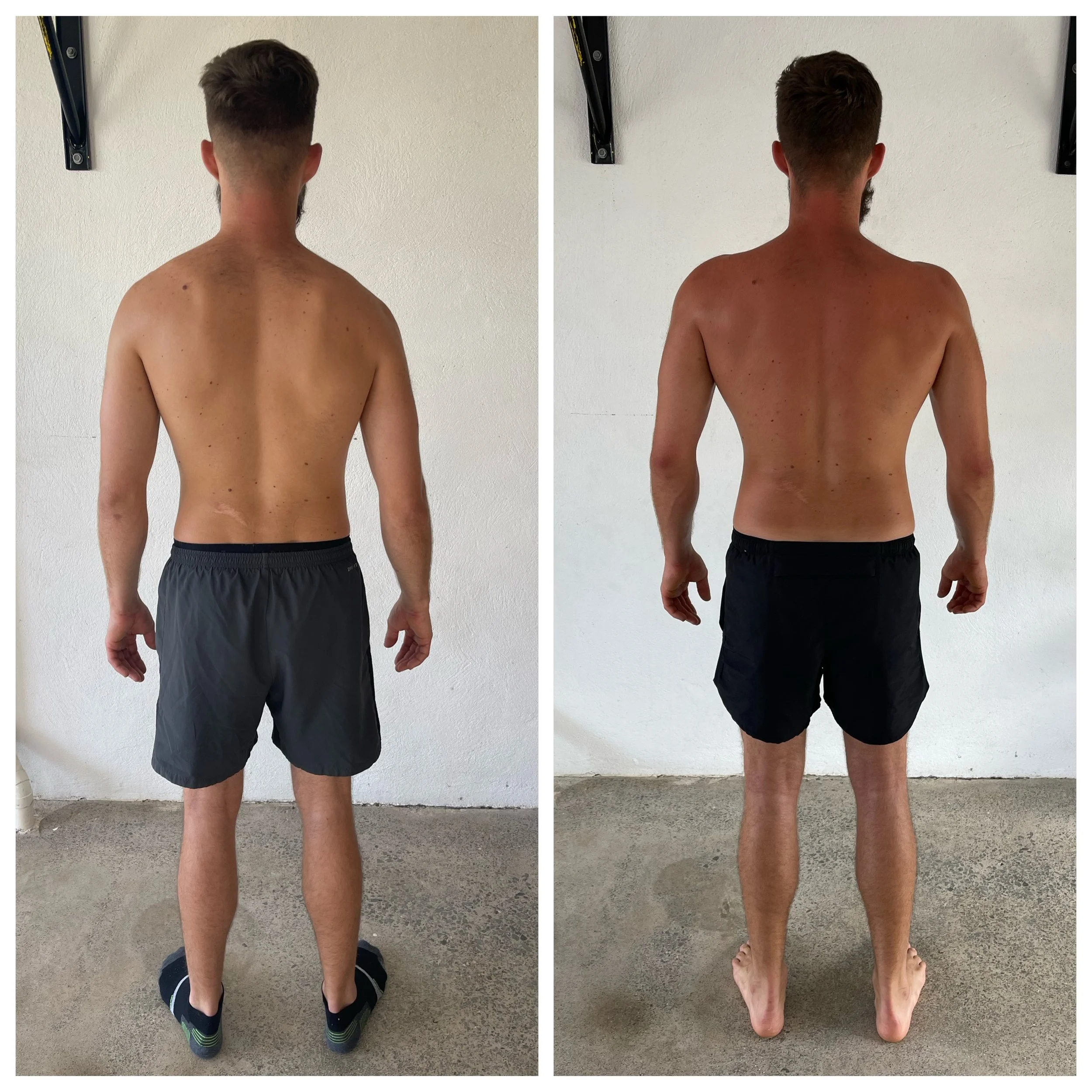
But why is this?
Because pain is rarely caused by weakness alone. Weakness is just one variable of many. It’s more nuanced than strong vs. weak.
At Functional Patterns Sunshine Coast, we regularly work with people who have spent years strength training, lifting weights, attending the gym, or completing rehabilitation exercises - yet still struggle with persistent back pain, neck pain, shoulder pain, knee pain, or recurring injuries.
In many cases, the missing piece isn't strength.
It's how that strength is being used.
The Problem With the "Weakness Causes Pain" Model.
Modern fitness culture often assumes that if a body part hurts, it must be weak.
Weak back? Strengthen it.
Weak glutes? Strengthen them.
Weak shoulders? Strengthen them.
While weakness can contribute to pain, it is often only one small part of a much larger picture.
The human body functions as an interconnected system. Pain often develops when movement patterns become inefficient, compensation strategies accumulate, and certain tissues are forced to absorb more stress than they were designed to handle.
But consider this: You can make a dysfunctional movement pattern stronger.
Unfortunately, that doesn't make it healthier.
Instead, it actually makes the problem worse.
Why Strong People Still Get Pain.
One of the biggest misconceptions in the fitness industry is that stronger automatically means healthier.
If that were true, elite athletes and experienced gym-goers would never experience injuries.
Yet we see the opposite.
Many people become incredibly strong while still:
Experiencing chronic back pain
Suffering recurrent shoulder injuries
Dealing with persistent neck tension
Developing hip, knee, or foot problems
Feeling stiff despite regular exercise
The issue isn't a lack of strength.
It's because the body is producing force through inefficient mechanics.
If joints aren't positioned well, posture is compromised, or movement patterns are poorly coordinated, adding more force into the system can simply increase the stress being placed on vulnerable areas.
CHRONIC Pain Is Most Often a Movement Problem.
Every step you take, every time you sit, stand, reach, lift, or run, your body distributes forces through muscles, joints, fascia, and connective tissue.
When movement is coordinated efficiently, these forces are spread throughout the body.
When movement becomes inefficient, certain structures are overloaded repeatedly.
This is where pain often begins.
The body doesn't just need strength.
It needs:
Coordination
Timing
Balance
Postural integrity
Efficient force transfer
Without these elements, strength becomes less useful because it isn't being applied effectively.
The Missing Link: Movement Quality.
At Functional Patterns Sunshine Coast, our goal isn't simply to make you stronger.
Our goal is to improve how your body functions.
This starts by assessing:
Posture
Walking mechanics
Running mechanics
Movement coordination
Compensation patterns
Breathing mechanics
Overall movement efficiency
From there, we use targeted exercises to help restore more efficient movement patterns.
Interestingly, our clients do become stronger as a result.
The difference is that their strength is now integrated into better movement rather than layered on top of dysfunction.
Why Traditional Strength Programs Sometimes Plateau.
Many rehabilitation, physio, chriro, osteo and gym-based programs initially produce results.
Pain decreases.
Movement improves.
Things feel promising.
Then progress stalls.
Often this happens because the program has improved local strength without addressing the global movement pattern that created the problem in the first place.
The body adapts remarkably well.
It can learn to tolerate dysfunctional movement for a while.
Eventually, however, compensation patterns often re-emerge and symptoms return.
This is why many people find themselves stuck in an ongoing cycle of:
Pain → Exercise → Improvement → Relapse
Breaking that cycle requires addressing how the body moves as a whole.
What Actually Creates Long-Term Change?
While every individual is different, long-term improvements often require a combination of:
Improved Posture
Posture influences how forces travel through the body during daily activities.
Better Movement Coordination
The body functions best when muscles work together rather than competing against one another.
More Efficient Walking and Running Mechanics
Walking is the movement pattern you perform thousands of times every day. Improving gait can have widespread effects throughout the body.
Appropriate Strength Development
Strength still matters - but it only truly works when built upon efficient movement patterns.
Consistent Practice
Long-term results come from reinforcing better movement habits repeatedly over time.
Strength Matters. It's Just Not the Whole Story.
Strength training can be an incredibly valuable tool.
The problem arises when it's treated as the entire solution.
If you've been getting stronger but your pain keeps returning, it may be time to look beyond muscle strength alone.
Understanding how your body moves - and improving the quality of those movements - can often reveal the missing piece that conventional approaches have overlooked.
Ready to Address the Cause, Not Just the Symptoms?
At Functional Patterns Sunshine Coast, we help people improve posture, movement mechanics, and overall function through an individualised approach focused on how the body works as an integrated system.
Every journey begins with a comprehensive movement assessment where we analyse posture, walking mechanics, movement coordination, compensation patterns, and overall function.
If you're tired of chasing symptoms and want to understand what's actually driving your pain, we'd love to help.
Book your initial assessment today and discover what your movement patterns may be telling you.
Frequently Asked Questions (FAQs)
-
Yes. Strength training can improve tissue capacity, resilience, and overall physical function. However, if underlying movement patterns remain dysfunctional, pain often persists despite becoming stronger.
-
Exercise is important, but pain is not always caused by weakness. Poor movement mechanics, compensation patterns, posture, and inefficient force distribution can all contribute to ongoing symptoms.
-
No. While weakness can play a role, pain is often influenced by multiple factors including movement quality, coordination, posture, previous injuries, lifestyle habits, and overall physical function.
-
Strength refers to the ability to produce force. Function refers to how effectively the body coordinates and applies that force during real-world activities such as walking, running, lifting, and daily movement.
-
Poor posture can alter how forces are distributed throughout the body, potentially increasing stress on certain joints, muscles, and connective tissues over time.
-
Functional Patterns places significant emphasis on posture, gait mechanics, movement coordination, and force transfer throughout the body. Strength development is integrated within a broader focus on improving overall human function.
-
Not necessarily. Many people benefit from continuing strength training while also addressing movement limitations, posture, and coordination issues that may be contributing to their symptoms.
-
A comprehensive movement assessment can identify postural imbalances, compensation patterns, gait inefficiencies, and movement habits that may be influencing how forces are distributed throughout your body.