

What Exercise Variables Actually Matter?
Most fitness systems separate the body into categories. Strength training for force production. Cardio for endurance. Stretches for flexibility. Mobility drills for joint range. Rehabilitation for pain and injury management.
At Functional Patterns Sunshine Coast, we take a different approach.
Instead of isolating physical qualities, Functional Patterns training focuses on the variables that govern how humans actually move in real life. When movement variables are organised correctly, the body can simultaneously improve strength, conditioning, mobility, coordination, posture, and overall function - without the trade-offs created by conventional training methods.
And so, we must ask:
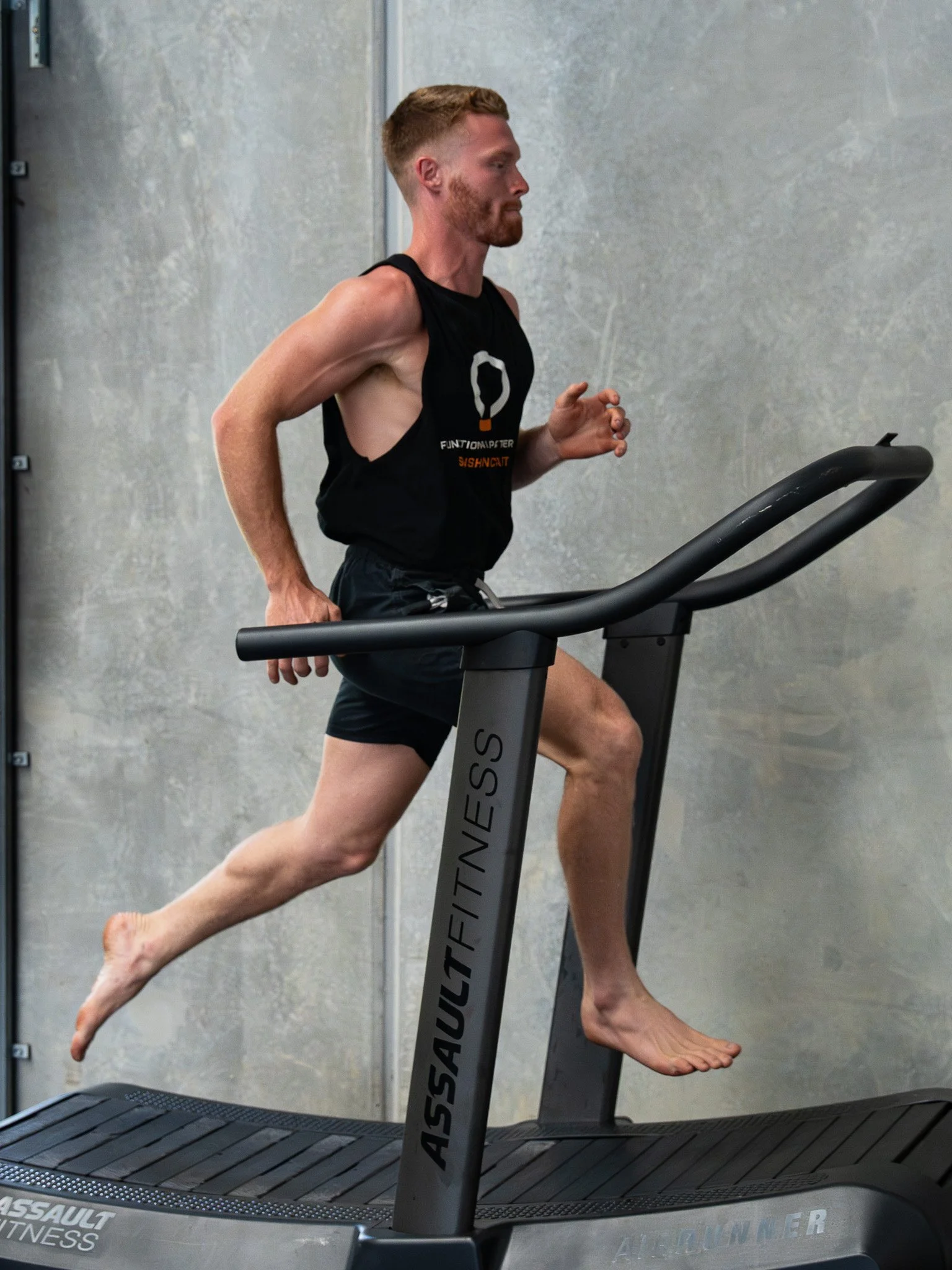
What movement variables actually matter?
Human Movement Is More Than Muscles
Most people think exercise is about muscles getting stronger. But human movement is really about how forces travel through the body.
Walking, sprinting, throwing, rotating, lifting, and even breathing all rely on all of the following:
Timing
Sequencing
Joint positioning
Rhythm
Elastic recoil
Force transfer
Coordinated muscular tension
If those variables are poorly organised, the body compensates. Over time, compensation often shows up as:
Chronic tightness
Joint pain
Reduced athletic performance
Fatigue
Poor posture
Inefficient gait mechanics
Rather than chasing isolated “fitness qualities,” Functional Patterns training works to improve the movement system itself.
The Key Variables We Focus On in Functional Patterns
1. Sequencing of Motion
One of the biggest variables in human movement is how force travels through the body in sequence.
Efficient movement follows predictable chains:
Feet interact with the ground
Rotation transfers through the hips and chest
The spine distributes force
The arms and legs reciprocate in motion
When sequencing breaks down, one area absorbs stress that should have been shared throughout the body.
This is why someone can be “strong” in the gym but still experience:
Knee pain
Hip tightness
Neck tension
Low back discomfort
Poor running mechanics
Functional Patterns training emphasises integrated movement patterns rather than isolated muscle contractions.
2. Positioning and Joint Orientation
The position of your ribcage, pelvis, spine, feet, and shoulders changes how efficiently your body can produce and absorb force.
For example:
A collapsed arch changes force transfer through the knee and hip
Excessive rib flare can alter rotational mechanics
Poor pelvic positioning can disrupt gait mechanics
Rounded shoulders affect rotation and arm swing
In Functional Patterns, posture is not just aesthetic. It directly influences movement efficiency.
Training focuses on improving:
Structural alignment
Dynamic posture
Rotational mechanics
Gait positioning
Balance between muscular chains
3. Rhythm, Tempo, and Biorhythm
Humans are rhythmic organisms.
Walking itself is a repeating cyclical pattern. Efficient movement depends heavily on timing and tempo.
Most conventional exercise ignores this completely.
Functional Patterns training often incorporates:
Controlled tempos
Alternating patterns
Rhythmic locomotion
Coordinated motion
Elastic timing
Why does this matter?
Because movement quality is not only determined by what muscles activate - but when they activate.
Poor timing creates unnecessary tension and inefficient force production.
Good timing improves:
Energy efficiency
Athletic performance
Coordination
Movement fluidity
Nervous system organisation
4. Rotational Mechanics
Human locomotion is rotational.
Every step you take involves:
Pelvic rotation
Thoracic rotation
Arm swing
Counter-rotation
Weight transfer, plus much more
Yet many training systems do purely linear exercises.
Functional Patterns places significant emphasis on:
Multi-planar movement
Transverse plane mechanics
Rotational power
Acceleration and deceleration
Force redirection
This helps bridge the gap between gym training and real-world movement.
5. Elasticity and Plyometric Function
The human body is designed to store and release elastic energy.
Tendons, fascia, and connective tissues act like springs.
When movement mechanics are efficient, the body can recycle energy effectively through:
Walking
Running
Sprinting
Throwing
Jumping
Functional Patterns incorporates progressive plyometric and elastic training to improve:
Reactive strength
Tendon resilience
Energy transfer
Dynamic stability
Athleticism
Done correctly, plyometrics are not just about jumping higher - they help restore natural elastic function throughout the body.
6. Breathing Mechanics
Breathing affects posture, ribcage mechanics, spinal orientation, and nervous system regulation.
Poor breathing mechanics can contribute to:
Excess neck tension
Rib flare
Reduced rotational ability
Fatigue
Poor core integration
Functional Patterns training integrates breathing into movement rather than treating it separately.
The goal is to improve:
Pressure management
Coordination
Relaxation under movement
Movement efficiency
Why We Don’t Isolate “Fitness Qualities”
Traditional fitness often separates:
Strength
Mobility
Cardio
Flexibility
Core training
Rehabilitation
But the body doesn’t operate in isolated categories.
When movement variables improve together, many physical qualities can improve simultaneously.
For example:
Better gait mechanics can improve conditioning
Improved posture can improve mobility
Better sequencing can improve strength transfer
Improved elasticity can reduce stiffness
Better breathing can improve endurance
This is one reason many people feel more “functional” when training movement patterns instead of endlessly chasing isolated metrics.
Can You Really Train Strength, Mobility, and Conditioning Together?
Yes.
That does not mean every physical quality improves maximally at all times.
However, Functional Patterns aims to reduce unnecessary trade-offs by improving movement efficiency itself.
Instead of:
Building strength on dysfunctional mechanics
Stretching unstable joints
Grinding cardio through poor posture
Creating stiffness through excessive compression
…the goal is to organise the body so physical qualities support each other more effectively.
What Makes Functional Patterns Different?
At Functional Patterns Sunshine Coast, our training process looks beyond isolated exercises.
We assess your specific:
Posture
Walking mechanics
Rotational capacity
Coordination
Breathing patterns
Force transfer
Compensation strategies
From there, exercises are selected based on improving movement efficiency and long-term function.
This approach is commonly used by people seeking:
Better posture
Reduced chronic tension
Improved movement quality
Athletic performance
Injury resilience
More efficient gait mechanics
Integrated full-body conditioning
Ready to Get Started?
The best place to begin is with an initial movement and posture assessment at Functional Patterns Sunshine Coast.
We assess your posture, gait mechanics, movement coordination, breathing patterns, compensation strategies, and overall movement efficiency to identify what may be limiting your function or contributing to pain and tension. From there, every session is tailored specifically to your body, goals, and movement needs - helping you build strength, mobility, conditioning, and resilience through a more integrated approach to training.
Frequently Asked Questions (FAQs)
-
Functional Patterns is a training methodology focused on improving human movement mechanics through posture, gait, throwing mechanics, rotational strength, coordination, and integrated conditioning.
-
Yes. Functional Patterns improves strength, but the emphasis is on usable force production integrated into efficient movement patterns rather than isolated muscular output alone.
-
Functional Patterns can significantly improve cardiovascular conditioning, particularly through integrated locomotion-based exercises and multi-planar movement patterns.
-
Many people experience improvements in mobility and flexibility because training focuses on improving joint positioning, posture, sequencing, and muscular balance simultaneously.
-
Walking and running are foundational human movement patterns. Gait mechanics influence posture, force distribution, joint stress, energy efficiency, and long-term movement quality.
-
Posture is a major focus of Functional Patterns training because body positioning affects breathing, movement sequencing, force transfer, and overall efficiency.
-
Many people seek Functional Patterns training to improve movement inefficiencies associated with chronic tension and discomfort. However, results vary depending on the individual and their condition.