

Quick Answer:
Knee pain when running can be influenced by how the entire body coordinates movement and manages mechanical forces. The knee doesn't function independently of the hips, pelvis, trunk and feet. Understanding how these components work together, alongside training demands and physical capacity, provides a more complete starting point for addressing recurring running-related knee pain.
Running is a fundamental human movement, but it places considerable demands on the body's ability to coordinate movement, manage forces and repeatedly transfer weight between the legs. When knee pain develops during running, the natural response is often to focus on the knee itself. Exercises are prescribed to strengthen it, running technique is adjusted, or training is reduced to allow symptoms to settle.
While these strategies can have their place, they don't necessarily address the broader movement patterns contributing to how the body manages the demands of running. The knee doesn't operate independently. Its function is influenced by the movement and positioning of the pelvis, hips, feet, trunk and the coordination of the entire body.
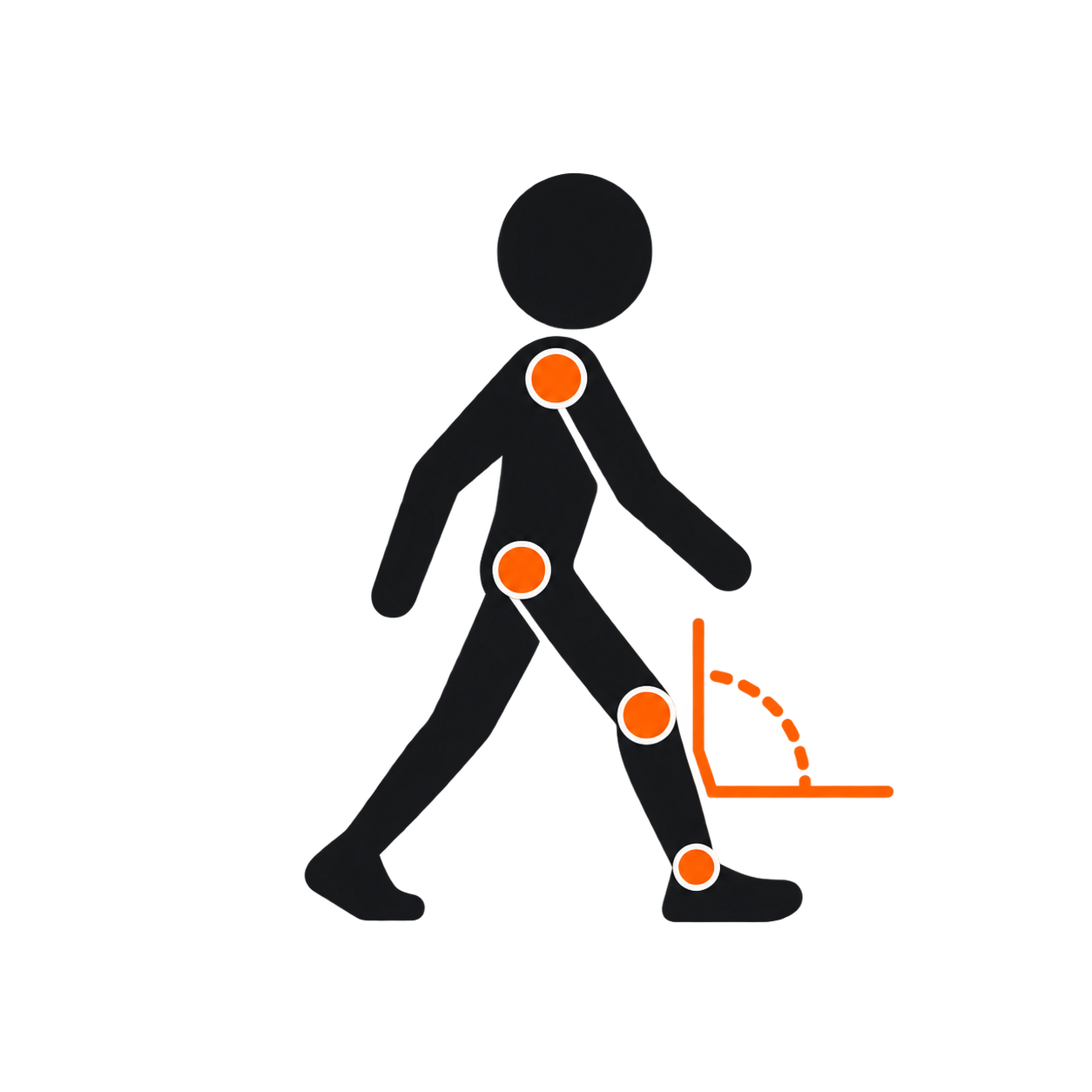
At Functional Patterns Sunshine Coast, we approach running-related problems by examining how the human body functions as an integrated system. Rather than viewing the painful area in isolation, we consider how the body organises movement, interacts with the ground and manages mechanical forces. Understanding these relationships provides a different starting point for addressing recurring knee pain.
Why Does My Knee Hurt When I Run?
Running involves repeatedly transferring the body's weight from one leg to the other while interacting with the ground. During each stride, the body must coordinate multiple movements to manage ground contact, maintain balance, generate propulsion and transition into the next step. The knee is an important part of this process, but its function is influenced by everything happening around it.
For example, consider the relationship between the pelvis and the supporting leg during running. As the body transfers its weight onto one leg, the pelvis must move in coordination with the supporting limb. The trunk also needs to organise itself in relation to this movement, while the opposite leg prepares for its next interaction with the ground.
These relationships influence how mechanical forces are distributed throughout the body. If the different components of this movement are poorly coordinated, the demands placed on particular tissues and joints may become less effectively managed. Over thousands of repeated strides, these demands matter. This is why understanding knee pain requires looking beyond the knee itself.
1. The Knee Is Part of a Much Larger Movement System.
One of the limitations of treating knee pain as an isolated problem is that it overlooks the interconnected nature of human movement. The body functions through a continuous relationship between its different segments. The feet interact with the ground, the legs manage changing mechanical demands, the pelvis coordinates weight transfer, and the trunk and arms contribute to the organisation of movement. These components influence one another.
Consider what happens when someone runs with limited coordination between their pelvis and trunk. Their ability to organise weight transfer may be affected, influencing how the lower limbs interact with the ground and manage the resulting forces. Similarly, limitations in how the body coordinates rotation can influence the way movement is distributed between the upper and lower body.
The important distinction is that we aren't simply looking for an isolated joint position that needs correcting. We're interested in understanding how the different components of the body work together to produce movement. A knee can be strong in isolation, but that doesn't automatically mean the person can coordinate the entire body effectively during running.
The question isn't simply whether your knee is strong enough. It's how effectively your entire body manages the demands of running.
2. Running Is About More Than Your Legs.
Running is often described as a lower-body activity. However, effective running requires coordinated movement throughout the entire body. The arms, trunk, pelvis and legs all contribute to the movement pattern. One important component is the relationship between rotational movement and weight transfer.
As we run, the body repeatedly transitions between supporting legs. This requires coordination between the pelvis and trunk, alongside the movement of the upper and lower limbs. The arms also contribute to this coordination through their relationship with trunk rotation. These movements aren't separate actions happening simultaneously by coincidence. They form part of an integrated movement strategy.
When examining running mechanics, we therefore need to consider how the body coordinates these relationships rather than focusing exclusively on individual variables such as foot strike or knee position. For example, changing someone's foot strike might alter how they interact with the ground, but it doesn't necessarily improve how their pelvis and trunk coordinate during weight transfer.
Likewise, strengthening the quadriceps might improve a particular aspect of knee function without necessarily improving the person's overall running mechanics. This doesn't make isolated exercises or technical adjustments completely irrelevant. It means they need to be understood within the context of the larger movement system.
3. How Does Poor Movement Coordination Influence Mechanical Loading?
Every time the foot interacts with the ground, the body must manage the resulting forces. These forces don't disappear at the point of contact. They are managed through the coordinated movement of the body. The positioning and movement of individual segments influence how these forces are transferred and distributed.
For example, consider the relationship between the pelvis, hip and knee. The position of the pelvis influences the orientation of the hip and the relationship between the upper and lower leg. The way the body transfers weight onto the supporting leg also influences the mechanical demands experienced during the stride.
These relationships are particularly important when considering repetitive activities such as running. A movement strategy that is repeated thousands of times creates repeated mechanical demands. The body's ability to manage those demands is influenced by its physical capacity and the coordination of the movement itself.
This is one reason why simply strengthening the painful area may not provide a complete solution. The knee is participating in a movement strategy organised by the entire body. If relevant limitations exist elsewhere in that strategy, they deserve consideration as part of the assessment and training process.
4. Why Does Knee Pain Often Return After Resting?
Many runners experience a frustrating cycle. Their knee starts hurting, they stop running for several weeks, the symptoms settle, and then the discomfort returns when they resume their previous training. Why does this happen?
Rest reduces the physical demands placed on the body. This can provide an opportunity for irritated or overloaded tissues to settle. However, reducing physical demands doesn't necessarily change the way someone organises movement. Nor does it automatically develop the capacity required to manage running again.
Consider someone who repeatedly experiences knee pain after running. If they take time away from running but return without addressing relevant limitations in movement coordination or physical capacity, they may simply reintroduce the same demands to the same movement strategy.
The symptoms may return because the underlying circumstances haven't meaningfully changed. This is where we need to distinguish between reducing symptoms and improving the body's ability to manage physical demands. Both are important, but they are not the same thing.
At Functional Patterns Sunshine Coast, we are interested in developing movement strategies that can be applied to the activities people actually perform, rather than simply addressing symptoms in isolation.
5. Why Traditional Knee Strengthening May Not Be Enough.
Strength is an important component of physical capacity. The quadriceps, hamstrings, calves and other muscles surrounding the knee contribute to managing the demands of running. However, the ability to produce force in an isolated exercise doesn't necessarily translate into the ability to coordinate movement effectively during running.
Consider the difference between performing a seated leg extension and transferring your weight between legs while running. The first is a relatively isolated movement. The second requires the coordination of the entire body, including the management of ground contact, balance, rotation and weight transfer. Both involve the lower limbs, but they place very different demands on the movement system.
This distinction matters.
A person can develop considerable strength through conventional gym exercises while continuing to struggle with the coordination required for more complex human movements. Rather than treating strength and movement coordination as competing priorities, we consider how they contribute to one another. The objective is not simply to develop stronger individual muscles. It is to improve the body's ability to coordinate and apply physical capacity during meaningful movement.
6. How Does Functional Patterns Approach Running-Related Knee Pain?
At Functional Patterns Sunshine Coast, our methodology is built around understanding the human body as an integrated system.
We consider four fundamental human movement patterns:
Standing
Walking
Running
Throwing
These movements provide a framework for understanding how the body organises itself against gravity, transfers weight, coordinates rotation and interacts with its environment. For someone experiencing recurring knee pain while running, this means looking beyond the painful area. We consider how the person manages:
Postural organisation - How does the body organise itself in standing, and how does this relate to the movements required during walking and running?
Weight transfer - How effectively does the person transfer their weight between supporting legs? What happens throughout the body during this process?
Rotational coordination - How do the pelvis, trunk and upper limbs coordinate their movements? Are these relationships contributing to an effective overall movement strategy?
Ground interaction - How does the person interact with the ground, and how does their body organise itself around the forces generated during movement?
Progressive movement development - Can the person develop more coordinated movement strategies through structured training and progressively apply them to increasingly demanding activities?
These considerations help us understand movement beyond the limitations of isolated exercises or assessments of individual joints. Our training methodology aims to improve how the body coordinates movement and manages mechanical demands across fundamental human activities.
7. Can You Improve Your Running Without THE Knee Pain?
Developing the ability to run comfortably involves more than simply returning to a previous training distance or strengthening the muscles surrounding the knee. It requires building the physical capacity and movement coordination necessary to manage the demands of running.
This involves progressively developing the body's ability to transfer weight, coordinate movement, interact with the ground and manage repeated loading. Training demands also need to be considered. Increasing running distance, intensity and frequency places additional demands on the body. These should be progressed in a way that allows sufficient time for adaptation and recovery.
The objective is to develop a movement system that is better prepared to manage those demands. For some people, this will involve modifying their running routine while developing physical capacity. Others may need additional clinical assessment or management depending on the nature of their knee symptoms.
The important thing is to understand the individual rather than assuming that the same exercise, technique adjustment or training prescription will work for everyone.
Ready to Get Started?
Recurring knee pain can be frustrating, particularly when conventional approaches have provided only temporary improvements. Sometimes the missing piece isn't another exercise for the knee. It is a better understanding of how the entire body is functioning during movement.
At Functional Patterns Sunshine Coast, we take a whole-body approach to biomechanics and movement training. We consider how standing, walking, running and throwing relate to one another, and how the body manages mechanical demands through these fundamental movement patterns.
Rather than treating the body as a collection of independent parts, our methodology focuses on developing more coordinated movement throughout the entire system. If knee pain is repeatedly interrupting your running, it may be time to look beyond the knee itself.
Ready to explore a different approach to understanding your movement?
Functional Patterns Sunshine Coast offers individualised movement assessments and training at our Sunshine Coast facility.
Frequently Asked Questions
-
Running places different mechanical demands on the body than walking. The speed, forces, weight transfer and coordination requirements are greater, which can expose limitations that aren't apparent during slower activities.
-
The way the body coordinates movement influences how mechanical forces are managed throughout the body. Limitations in whole-body coordination, positioning and weight transfer can be relevant considerations when understanding recurring running-related knee pain.
-
Rest can reduce the demands placed on sensitive tissues, allowing symptoms to settle. However, it doesn't necessarily change the movement strategy or develop the physical capacity required to manage running again.
-
Strengthening can be valuable, but running requires coordinated movement throughout the entire body. Developing isolated muscle strength doesn't automatically improve the body's ability to coordinate movement during running.
-
Functional Patterns considers how the entire body coordinates standing, walking, running and throwing. Training focuses on developing movement coordination, weight transfer and the ability to manage mechanical demands throughout the body.
Why does my knee hurt when I run but not when I walk?
Running places different mechanical demands on the body than walking. The speed, forces, weight transfer and coordination requirements are greater, which can expose limitations that aren't apparent during slower activities.
Can poor biomechanics contribute to knee pain when running?
The way the body coordinates movement influences how mechanical forces are managed throughout the body. Limitations in whole-body coordination, positioning and weight transfer can be relevant considerations when understanding recurring running-related knee pain.
Why does my knee pain return after resting?
Rest can reduce the demands placed on sensitive tissues, allowing symptoms to settle. However, it doesn't necessarily change the movement strategy or develop the physical capacity required to manage running again.
Is strengthening the knee enough to fix running-related knee pain?
Strengthening can be valuable, but running requires coordinated movement throughout the entire body. Developing isolated muscle strength doesn't automatically improve the body's ability to coordinate movement during running.
How does Functional Patterns approach running-related knee pain?
Functional Patterns considers how the entire body coordinates standing, walking, running and throwing. Training focuses on developing movement coordination, weight transfer and the ability to manage mechanical demands throughout the body.