

ADAPTATION vs. MALADPTATION: you are what you repeat.
Your body is always adapting.
Every step you take, every posture you hold, every time you sit, stand, reach, breathe, train or move is giving your nervous system and tissues information about what they need to become better at. The important question is not whether you are adapting. It is:
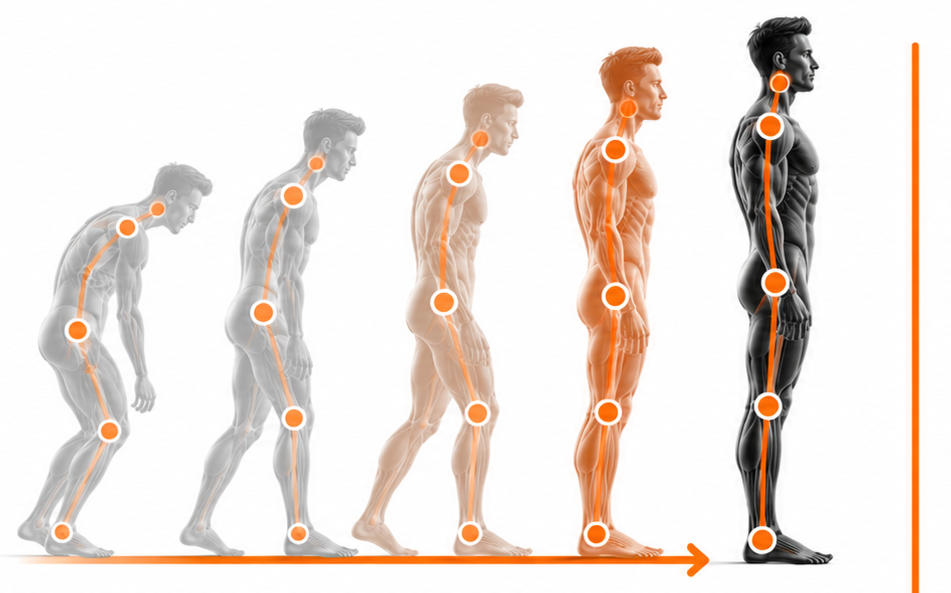
Are you adapting towards better function - or away from it?
At Functional Patterns Sunshine Coast, this distinction between adaptation and maladaptation sits at the centre of how we understand pain, posture, movement and performance.
What Is Adaptation?
Adaptation is simply the process by which your body changes in response to the demands repeatedly placed upon it.
If you repeatedly expose your body to a useful movement strategy, your nervous system becomes better at coordinating it. Your tissues become better organised around it. Force can be distributed more effectively, and that movement gradually becomes easier and more automatic. This is positive adaptation.
But your body does not automatically distinguish between a movement strategy that is useful long-term and one that merely gets the job done today. Instead, it adapts to what you repeatedly ask it to do. That means the exact same process can move you in the opposite direction. This is negative adaptation (or maladaptation).
What Is Maladaptation?
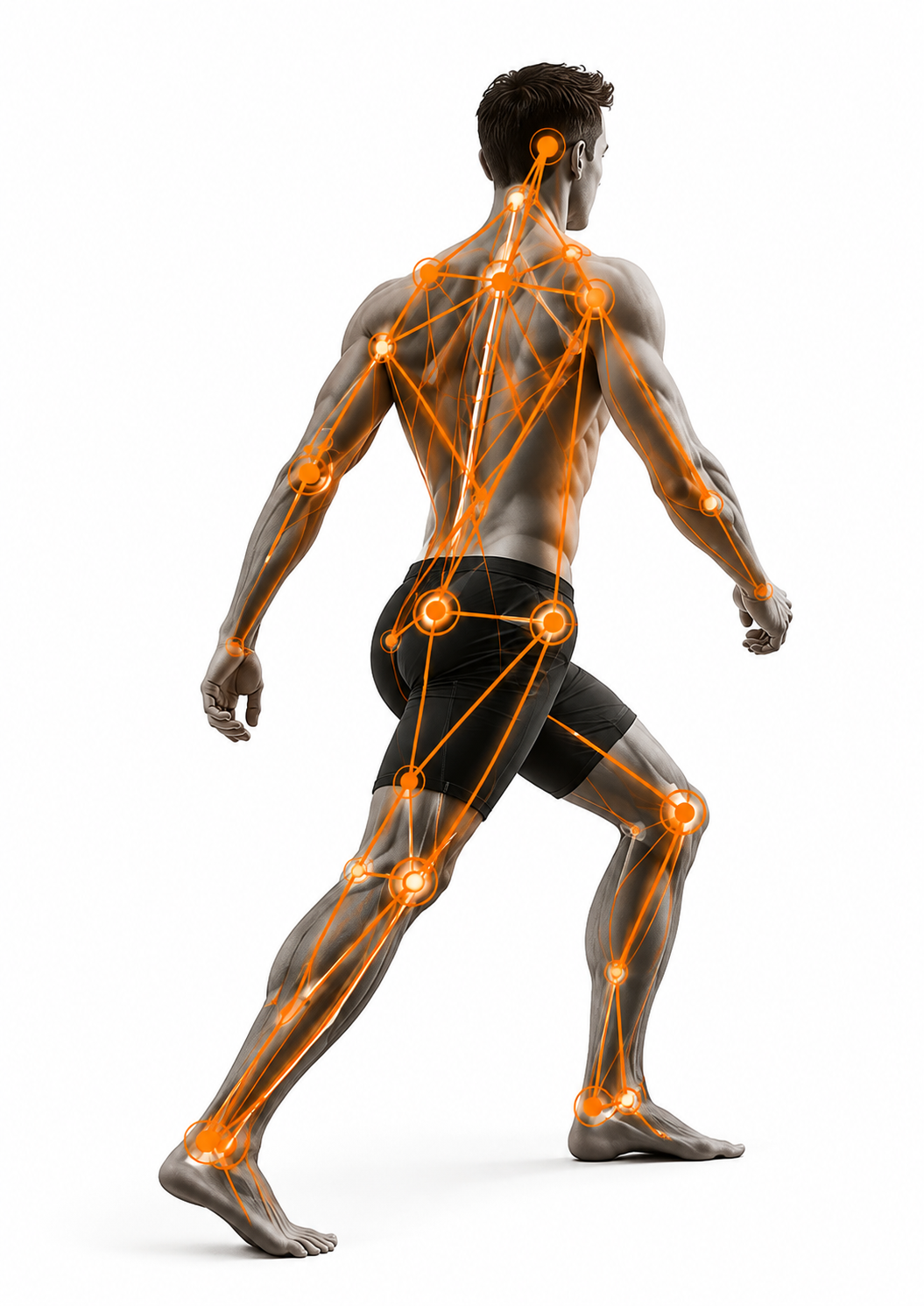
Maladaptation occurs when repeated movement strategies progressively organise the body in a way that becomes less efficient, less resilient or more limiting over time.
The body is remarkably good at finding ways to keep you moving. After an injury, during periods of pain, because of poor movement habits, or simply through years of repeating the same activities, your body may find an alternative strategy to complete a task. These alternatives are commonly called compensations or dysfunctions.
Initially, that compensation may be useful. It allows you to keep walking, working, exercising or functioning despite whatever limitation existed at the time.
The problem begins when that temporary solution becomes your default. Repeated often enough, the compensation is no longer something your body occasionally uses.
It becomes how your body moves.
Your Body Gets Better at What You Repeat.
Movement is not simply something your body performs. It is a behaviour your nervous system learns through repetition.
Every time you walk, sit, stand, reach or breathe, you reinforce a particular strategy. Over time, your body becomes increasingly efficient at performing the movement behaviours you repeat most frequently - regardless of whether those behaviours are actually efficient.
Imagine someone who has transferred their weight poorly while walking for twenty years. That person has not performed the pattern ten times. They have very likely rehearsed it millions of times and their nervous system has become exceptionally familiar with that strategy.
This is one reason chronic movement problems can be stubborn. It is not necessarily that the body is incapable of moving differently.
It has simply had an enormous amount of practice moving the way it currently does. That leads to one of the most important concepts we teach:
Your body is the sum of the movement behaviours you repeatedly reinforce. Change what you reinforce, and you change your body.
Why Maladaptation Can Eventually Lead to Pain.
A compensation does not automatically equal pain. Your body can compensate successfully for a very long time.
But compensation changes how force is distributed through the body. Instead of hundreds of structures sharing the load efficiently, certain areas may begin doing disproportionately more work while others contribute less. Over enough repetitions, those areas can become increasingly overloaded.
Eventually you may notice things such as:
persistent tightness or stiffness
recurring injuries
reduced movement options
deteriorating posture
poorer balance or coordination
reduced performance
pain
Importantly, the symptom is often the end of the process rather than the beginning. By the time an area hurts, the movement strategy contributing to that overload may have been reinforced for years. This is one of the reasons simply chasing the painful area can miss the bigger picture.
The Body Does Not Work as Separate Parts.
A knee does not move independently of the hip. A hip does not move independently of the pelvis. The pelvis does not move independently of the ribcage. And none of these operate separately from your feet, spine, shoulders or arms when you walk, run or rotate. The human body functions as one interconnected system.
Every step, breath, posture, reach and rotation requires many structures to coordinate and distribute force throughout the body. When this happens efficiently, movement tends to become smoother, more coordinated and more resilient. When it does not, the body must find alternative strategies.
This also explains why the location of pain does not necessarily tell you where the problem originated. Someone with knee pain may have important movement limitations through their pelvis, trunk or opposite leg. Someone with shoulder pain may have poor rotation elsewhere in the body.
The symptom tells us where the body is struggling to tolerate the current strategy. It does not automatically tell us why that strategy developed.
Joint Position Changes Where Force Goes.
One important part of this is joint positioning. Because the body is interconnected, force must travel through it. The position of your joints helps determine that pathway.
When positioning is efficient, more of the body can contribute to the movement. When it is not, certain tissues may receive more stress while others contribute very little.
This is why at Functional Patterns Sunshine Coast we are interested in more than simply whether a muscle is “strong” or “tight”. Those findings can be useful. But they need to be understood within the context of how the entire body is organising movement and distributing force.
How Do We Know What BETTEr Adaptation Looks Like?
To improve movement, we need some reference point for what efficient human movement actually looks like. At Functional Patterns, we prioritise four fundamental human movement behaviours:
Standing. Walking. Running. Throwing.
These are known as the FP First Four. They underpin an enormous amount of what humans do in sport and everyday life. We also study people who demonstrate exceptional movement efficiency and look for repeatable characteristics across them.
These include:
effective force transfer through the whole body
coordination between the upper body, lower body and limbs
distributed loading rather than one area doing all the work
movement that remains controlled and adaptable under demand
consistent sequencing between body segments
The objective is not to turn every person into an elite athlete. It is to use efficient movement as a reference point, identify where someone's current strategy differs, and systematically work to close that gap.
From Maladaptation Back Towards Better Adaptation.
If maladaptation is created through repeated exposure, improving it relies on the same biological principle. We change what the body repeatedly experiences. At Functional Patterns Sunshine Coast, we broadly think about that process in four stages:
1. Identify
Understand the movement strategies currently being used and where efficiency is being lost.
2. Reposition
Create better joint positions, stability and coordination through movement.
3. Reinforce
Practise, load and condition the improved movement strategy repeatedly.
4. Adapt
Over time, the nervous system and tissues reorganise around the new strategy. Your current movement pattern did not develop overnight. Changing it generally does not happen overnight either. The difference is that the repetition is now being directed somewhere useful.
Why More Exercise Is Not Necessarily Better.
This is also why simply doing more exercise does not automatically create a better result. Every repetition is an opportunity for adaptation. If the repetition reinforces a more efficient strategy, that is useful. If it reinforces the same movement pattern contributing to the problem, doing hundreds more repetitions may simply strengthen the maladaptation.
The goal is therefore not just more movement. It is better movement, reinforced consistently enough that the body begins to reorganise around it. This distinction becomes particularly important when people are exercising several times per week while simultaneously trying to change an entrenched movement problem.
Can Your Normal Training Reinforce Maladaptation?
Yes. Sometimes an activity you enjoy can repeatedly expose your body to the same strategy you are trying to change. That does not mean the activity is inherently “bad”. It means the way your body currently performs it may be reinforcing an unwanted pattern. In some cases, temporarily reducing or modifying an activity can give the nervous system more opportunity to establish a different movement strategy.
We call this the Movement Elimination Protocol.
The goal is not to permanently remove movement. It is to temporarily reduce the rehearsal of the old strategy while a better one is being established.
Adaptation Is Happening All the Time.
This is perhaps the main takeaway. Your body is never really static. The way you move today influences the way you will be able to move tomorrow. Every repeated behaviour pushes the system slightly in one direction or another.
Toward: better force distribution → better coordination → greater resilience → positive adaptation
OR
toward: compensation → inefficient loading → repeated stress → maladaptation
This doesn't mean every imperfect movement is harmful. Human beings need variability and adaptability.
The issue is what happens when inefficient strategies become dominant, repetitive and deeply reinforced.
The Goal: Build a Body That Adapts Better.
At Functional Patterns Sunshine Coast, our goal is not simply to make a sore area temporarily feel better. It is to progressively improve the movement strategies your entire body uses so it can distribute force more efficiently and deal with the demands of everyday life. As movement becomes more efficient, the body has a better opportunity to:
reduce unnecessary stress on overloaded areas
improve posture
improve walking and running mechanics
increase coordination and balance
tolerate greater physical demands
become more resilient over time
Ultimately, symptom relief is one possible outcome of the larger objective: building a body that moves well, adapts well and handles stress more effectively.
Want to understand what your body is adapting to?
At Functional Patterns Sunshine Coast, we assess how your body currently organises movement, identify the strategies that mat be limiting your function, and build a plan to progressively improve them. Hit the button below to get started.
FREQUENTLY ASKED QUESTIONS.
-
Maladaptation describes a situation where repeated movement behaviours progressively organise the body around a less efficient or more limiting strategy. This can influence how force is distributed through the body and may eventually contribute to pain, poor posture or reduced performance.
-
No. Compensation is one of the body's ways of keeping you functioning when something is limited. The issue arises when that temporary workaround becomes a repeated default strategy and begins creating problems elsewhere.
-
Yes. Your body adapts to repeated movement whether that movement is efficient or inefficient. Performing large volumes of poorly organised movement can reinforce the very strategy you are trying to change.
-
The general process is to identify inefficient movement strategies, improve positioning and coordination, repeatedly reinforce a better strategy and allow the body time to adapt to it. All of this needs to be done in the context of the movements that define being human - i.e. running, walking, standing, and throwing.
-
Because the human body functions as an integrated system. The painful area may simply be the part of the system currently struggling to tolerate the load, while the movement strategy contributing to that overload involves other areas of the body as well.